
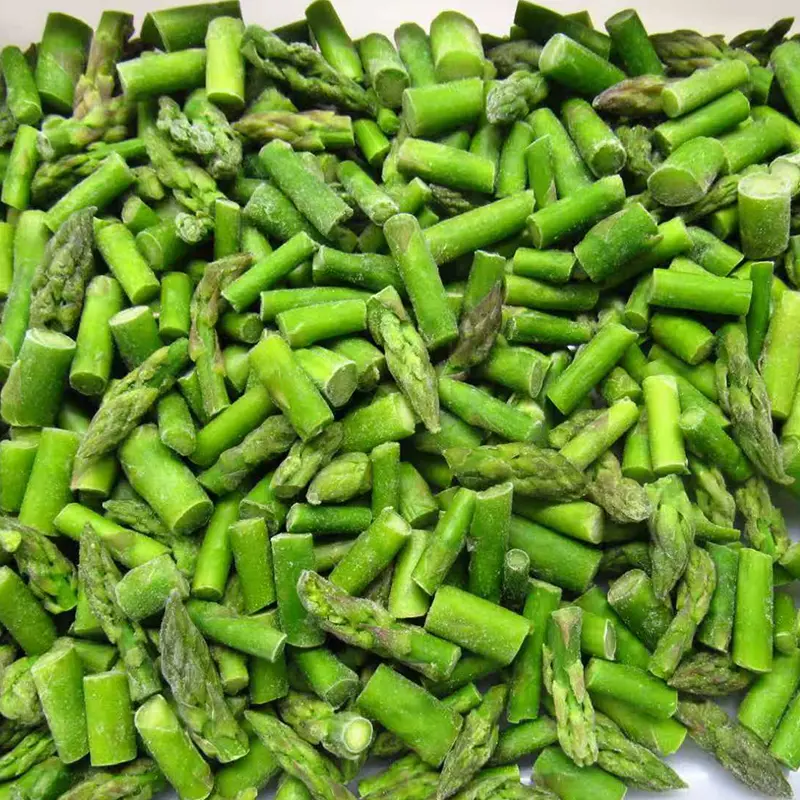


Introduction to Frozen Asparagus
Frozen asparagus refers to a deep-processed vegetable product made by quickly freezing fresh asparagus (tender shoots without fibrosis) through low-temperature quick-freezing technology for long-term preservation. Using “quick-freezing” technology, it maximizes the retention of asparagus’ nutritional value and natural flavor, with each spear maintaining an upright, vibrant green color, crisp texture, and sweet taste akin to fresh asparagus. This convenient frozen form breaks through seasonal limitations (fresh asparagus is mainly harvested from spring to early summer), making it a healthy fast-food option for households, catering services, and busy lifestyles. It shares the same high-fiber, low-calorie profile as fresh asparagus (~20kcal/100g) and can be quickly cooked, perfectly adapting to modern efficient living needs.
Key Advantages
- Nutrient preservation: Quick-freezing locks in nutrients before asparagus cells fully freeze, retaining over 90% of vitamin C, vitamin A, dietary fiber, and folic acid (fresh asparagus loses ~20% vitamin C after 2 days at room temperature).
- Natural flavor: Free of artificial additives (e.g., preservatives, colorants), it retains asparagus’ natural sweetness through blanching and quick-freezing (some products are lightly salted for flavor).
- Vibrant color: Standardized blanching (with vitamin C for color protection) effectively inhibits chlorophyll degradation, keeping each spear upright and bright green (matching the color of freshly picked asparagus within 2 hours).
- Convenience: No need for root trimming or washing (some products are pre-processed). Thawed spears can be microwaved, boiled, or stir-fried (cooked in 1-3 minutes), ideal for busy lifestyles.
- Healthy and low-fat: High in fiber (2.1g/100g) and low in calories (~20kcal/100g), rich in potassium and magnesium (202mg potassium/100g), making it an excellent choice for blood sugar control, weight loss, and daily nutrition supplementation.
Application Scenarios
- Quick home meals: Thawed spears microwaved for 1 minute, tossed with garlic and olive oil for “Garlic Asparagus”; or stir-fried with eggs (“Asparagus Egg Stir-Fry”) for quick home dishes.
- Restaurant sides: Served with steak, seafood (salmon, shrimp), or salads (mixed with lettuce, cherry tomatoes) to enhance the dish’s freshness.
- Healthy light meals: A key ingredient in salad bowls (with chicken breast, quinoa, avocado), or blended into smoothies (mixed with spinach, banana) for dietary fiber supplementation.
Quality Tips
- Store at a stable temperature below -18°C; avoid repeated thawing and refreezing (causes asparagus to absorb water, soften, and lose texture).
- Control reheating time (microwave on medium-high for 1 minute, boil for 2 minutes). Avoid prolonged high heat (causes softening and yellowing).